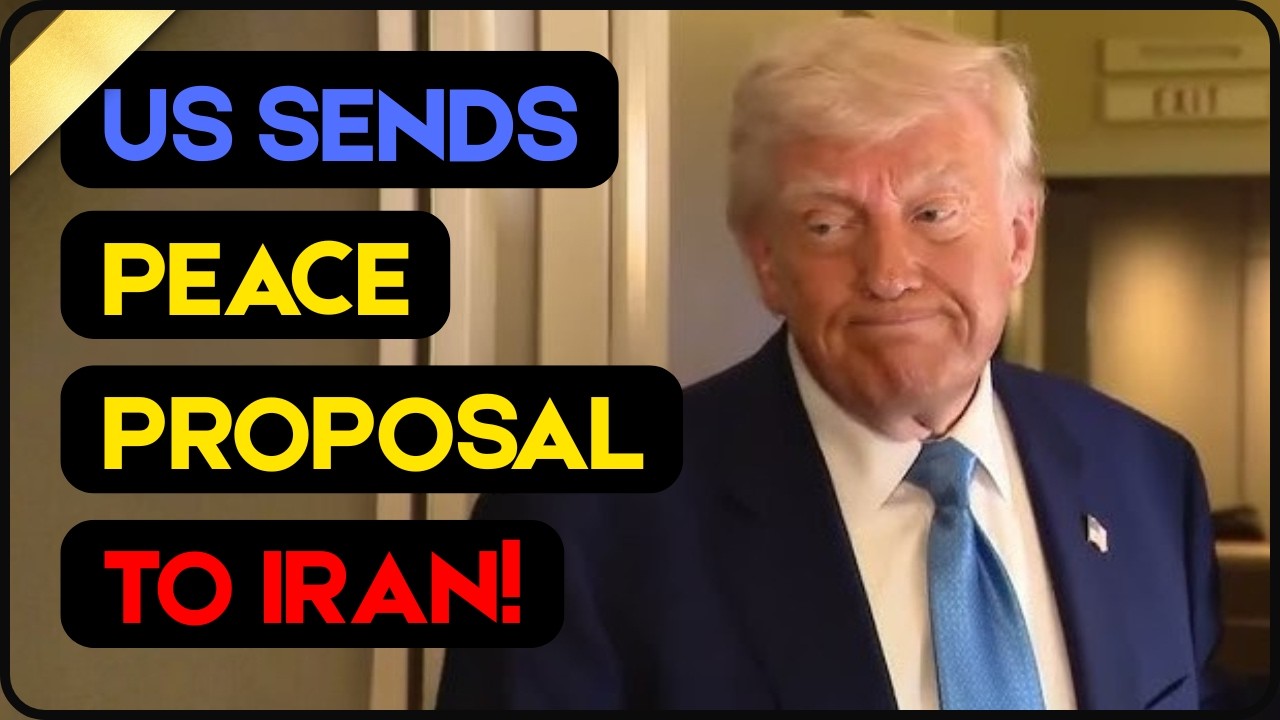
The United States has deployed the world’s largest aircraft carrier, the USS Gerald R. Ford, to the Middle East as US-Iran tensions escalate despite ongoing nuclear negotiations. This massive deployment signals a critical moment in Middle East geopolitics that could reshape the entire region.
The USS Gerald R. Ford, a nuclear-powered supercarrier capable of carrying over 75 aircraft, is heading to join the USS Abraham Lincoln already stationed in the region. President Trump has described this dual-carrier presence as a “military flotilla” – a significant show of American military power projection in one of the world’s most volatile regions.
But here’s where things get interesting: The stated reason for this pressure campaign is to prevent Iran from developing nuclear weapons. However, Iran’s atomic chief has recently indicated willingness to halt uranium enrichment and even dilute existing enriched uranium stockpiles – IF the United States lifts all economic sanctions. This diplomatic opening potentially undermines the hardline position that’s been driving US policy.
This puts Washington in an awkward position. If Iran is genuinely willing to curb its nuclear program, the justification for military pressure weakens considerably. More importantly, any deal that involves lifting sanctions would strengthen Iran economically – something Israeli Prime Minister Netanyahu would strongly oppose, given his consistent advocacy for maximum pressure on Tehran.
So why is Trump deploying even more military assets? Three strategic reasons: First, additional carriers increase leverage in negotiations, potentially forcing Iran to accept terms more favorable to Washington. Second, it signals to Netanyahu that America isn’t abandoning Israel and remains prepared for military action if needed. Third, if conflict does erupt, the US will have overwhelming military capabilities already in position.
Meanwhile, Gulf Arab monarchies are issuing warnings that any military strike could trigger another devastating regional conflict, threatening stability across the Middle East and disrupting global energy markets. The stakes couldn’t be higher – not just for America, Iran, and Israel, but for the entire international community.
This is news without the Western spin – giving you the full picture of what’s really happening in Middle East geopolitics, beyond the headlines. Stay tuned for updates as this situation develops.