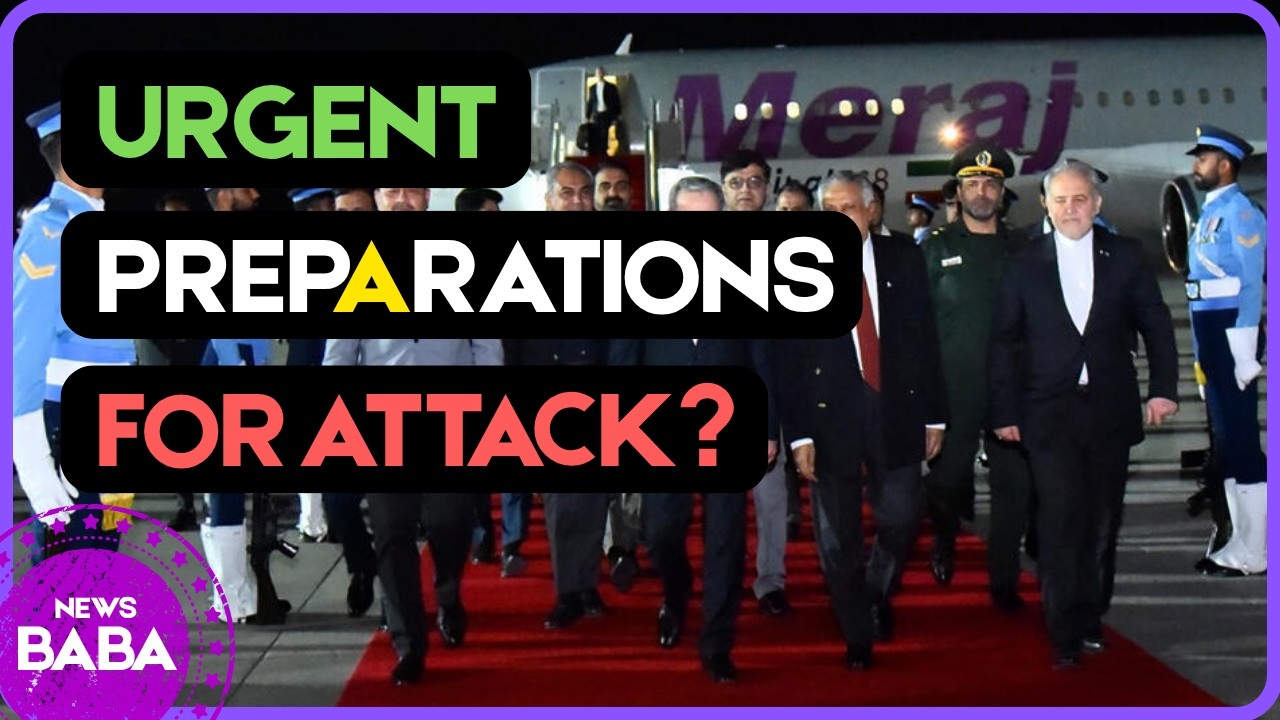
In this episode of News Without the Western Spin, we break down Benjamin Netanyahu’s bold vision of a so-called “hexagon” alliance system surrounding the Middle East — and what it really means in today’s shifting geopolitical landscape.
Is this a realistic security architecture? Or is it a strategic narrative designed to frame the region as divided into competing “axes”?
We analyze:
🇮🇱 Israel’s proposed “Hexagon” alliance: Israel, India, Cyprus, Greece — and potentially UAE or an African state
The so-called Shia Axis: Iran and aligned forces in Iraq, Yemen, Lebanon
The emerging Sunni Axis: Saudi Arabia, Egypt, Türkiye, Syria, Qatar, GCC states — and possibly Pakistan
The growing technical cooperation between Sunni and Shia power centers
The slow U.S. strategic drawdown from the Middle East
The possibility of a “Native Diamond” — 4 regional powers acting in pragmatic alignment
The Shia Axis
At the core sits Iran, alongside aligned movements in Iraq, Lebanon, and Yemen. Despite sectarian divides, Iran has positioned itself as a consistent military backer of Palestinian factions — a key geopolitical variable.
The Sunni Axis
Here we’re talking about heavyweights like Saudi Arabia, Egypt, and Türkiye — with supporting roles potentially played by Qatar, Syria, and other GCC states. Even Pakistan enters the equation with its nuclear umbrella in the broader strategic calculus.
Israel’s Hexagon Strategy
Netanyahu’s vision includes outreach beyond the Middle East:
India — strong tech and defense ties with Israel
Cyprus & Greece — Eastern Mediterranean security partners Potential African footholds like Ethiopia or strategic positioning near Somaliland
But here’s the key question: As the U.S. recalibrates its role in the region, are Sunni and Shia blocs actually drifting toward strategic coordination rather than confrontation?
For decades, sectarian fragmentation has shaped Middle East geopolitics. But in 2023 and beyond, we are seeing:
Increased Saudi-Iran dialogue
Regional de-escalation efforts
Multi-polar power balancing Reduced Western narrative dominance
If sectarian division weakens, the real geopolitical shift may not be a hexagon — but a regional consolidation of native administrations acting in pragmatic self-interest.
Is this divide-and-conquer strategy still viable?
Or are we witnessing the early stages of a post-sectarian regional order?
This is a deep dive into Middle East geopolitics, regional power blocs, alliance systems, and strategic realignment in a multipolar world.
Keywords:
Middle East geopolitics, Israel Iran tensions, Sunni vs Shia politics, Netanyahu hexagon alliance, Saudi Arabia foreign policy, Türkiye regional power, Egypt strategy, GCC politics, India Israel relations, Eastern Mediterranean security, Red Sea geopolitics, Yemen conflict, Lebanon crisis, multipolar world order, US withdrawal Middle East, regional alliances 2026, breaking geopolitical analysis